Reunification
What Is Readiness-Based Reunification? A Clinician's Guide
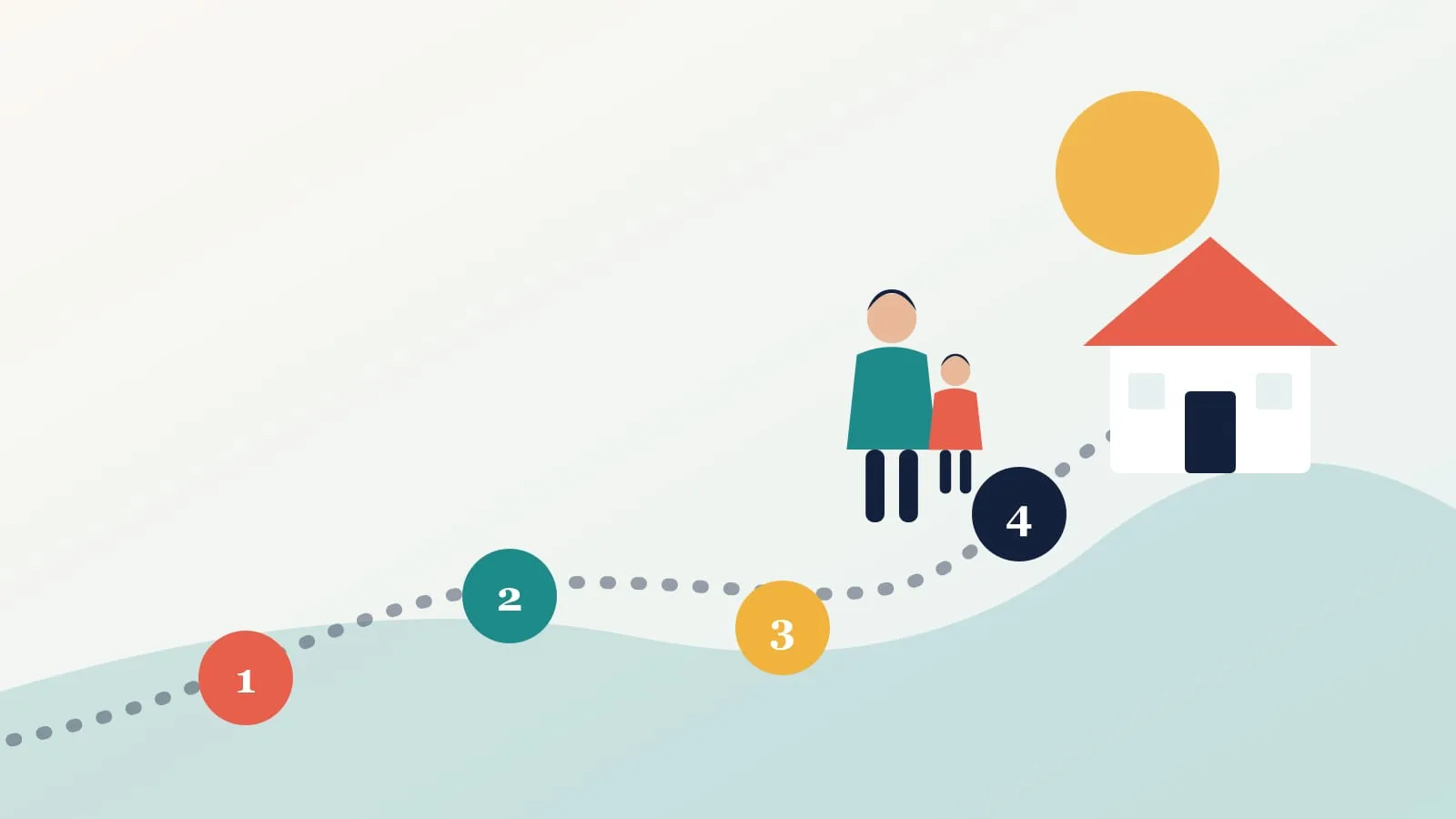
Readiness-based reunification is an approach in which parent-child contact expands when a family shows observable readiness, rather than when a date on a court calendar arrives. Clinicians look at four things: safety, accountability, stability and communication. When they are present, contact moves forward. When they are not, the family slows down and keeps working.
I’m Monique Harris-Whitt, a Licensed Clinical Social Worker and the founder of The Therapeutic Solution in Las Vegas. Readiness is the idea at the center of everything I do, and it is the idea I most want clinicians, attorneys and judges to be able to use. This guide explains what it means and how it works in practice.
What does readiness-based reunification mean?
Reunification is the work of safely rebuilding a relationship between a child and a parent after separation, estrangement or high conflict. Readiness-based describes how that work is paced.
In a readiness-based approach, each step in a child’s contact with a parent, for example from supervised visits to longer visits, or from visits to joint sessions, is tied to evidence. The question is never “how many weeks have passed?” It is “what have we seen that tells us this family can hold the next step?”
This is the principle behind my Continuum of Care, the four-phase pathway used with court-involved families. Families move from therapeutic supervised visitation, to facilitated conjoint therapy, to reunification therapy, to aftercare and step-down. Each change of phase is guided by what clinicians observe, not by the calendar.
Why timelines alone fail children
Court-ordered timelines exist for good reasons. Courts need predictability, and children should not wait indefinitely in limbo. But a timeline that is the only driver of contact creates two risks.
Contact can move faster than the child can handle. A child who has not yet felt safe may be pushed into longer or less structured time with a parent because the schedule says so. Fear, loyalty conflicts and resistance usually increase, and the relationship takes a step backward.
Contact can stall when progress goes unseen. A parent who has done real work may wait for the next step because no one has documented what has changed. The child loses time and the parent loses motivation.
A readiness-based approach answers both problems. It slows contact when the evidence says slow, and it moves contact forward when the evidence says go.
The four readiness indicators
Before contact expands, clinicians look for evidence in four areas.
- Safety. Concerns are named and actively managed, not minimized. The child is physically and emotionally safe in the current arrangement.
- Accountability. The parent can describe their own part in the family’s history without blaming the child or the other parent.
- Stability. Housing, routines and relationships are steady enough to hold more contact.
- Communication. Visits, exchanges and conversations stay calm and child-focused.
I go through each one in detail in an upcoming post on the four readiness indicators every reunification case needs. The important point here is that the indicators are observable. They are things a clinician can see, record and describe to a court.
How the Continuum of Care applies readiness
Each phase of the Continuum asks the same question in a different way.
In therapeutic supervised visitation, a licensed therapist coaches the parent during visits and documents what happens. This phase builds the evidence base: how the parent responds to the child, how the child responds to the parent, and whether the indicators are present.
In facilitated conjoint therapy and reunification therapy, the work moves from observation to repair. A child is never forced to forgive, show affection, disclose or make contact. Connection is invited, not demanded.
In aftercare and step-down, support is reduced gradually as the family shows it can hold steady without a professional in the room.
At every transition, the clinician asks whether the indicators are present, and records the answer.
What readiness looks like in a court-involved case
Judges and attorneys need clear and neutral information. In practice, a readiness-based report includes:
- Objective, factual observations of what happened, not opinion presented as fact
- A structured view of where the family stands on each indicator, supported where appropriate by structured assessment such as the RARS™ assessment suite
- A clear recommendation: expand contact, hold at the current level, or step back, with the reasons
Scores and observations inform decisions. They never make them alone, and the court decides what is ordered.
This gives everyone a shared standard. Instead of competing opinions about whether a parent has “changed enough”, the court sees what was observed, against indicators everyone can read.
A composite example
Consider a composite family, not any real one. A father returns after a long absence and is ordered to have supervised contact with his eight-year-old daughter. In the first weeks, visits are stiff. He asks a lot of questions, she answers in single words, and he gets frustrated when she does not warm up.
On a calendar-driven order, he might be moved to longer, unsupervised visits at week twelve, whether or not anything has changed. On a readiness-based path, the clinician is watching for something different. Does he notice his frustration and adjust? Can he talk about the years he was gone without asking his daughter to comfort him? Is his housing settled, and does he arrive on time? Do exchanges with the mother stay calm?
Over several visits, he learns to follow his daughter’s lead, and she begins to bring a drawing to show him. The clinician records those changes against the indicators, and the recommendation to expand contact rests on them. If instead his accountability stalls and exchanges grow tense, the recommendation is to hold, with clear reasons and a plan for what would change that answer.
Either outcome gives the court something concrete. And either one is better for the child than a date that ignores what is happening in the room.
Common misconceptions
“Readiness-based means slower.” Not necessarily. Some families move quickly because the evidence is strong. The approach is about matching the pace to the evidence, in either direction.
“Readiness gives clinicians too much power.” The court decides what is ordered. The clinician’s role is to observe, document and recommend, and a good report shows its reasoning so it can be questioned.
“It favors one parent.” The indicators are the same for every family, and they focus on the child’s experience. They are not a judgment on either parent’s character.
“A child who resists is not ready, so we stop.” Resistance is information, not a verdict. It tells clinicians to look closely at what the child is experiencing and to adjust, not to give up on the relationship.
“Readiness is subjective.” It can be, if it is done carelessly. That is why the indicators are tied to observable behavior and written down. The more clearly a program describes what it looks for, the less room there is for guesswork.
How clinicians and programs can begin
You do not need a new program to start working this way. A few steps help:
- Name your indicators. Write down what safety, accountability, stability and communication look like in your setting.
- Define the evidence. For each indicator, list two or three things a staff member could actually see and record.
- Standardize your notes. Use the same structure for every visit so patterns are easy to spot.
- Review cases together. Regular case discussions help staff apply the indicators consistently.
- Tie recommendations to evidence. Every recommendation to expand, hold or step back should point to what was observed.
None of this requires certainty. It requires being clear about what you are looking for, and honest about what you saw.
Readiness and the child’s voice
A readiness-based approach keeps the child at the center. That does not mean a child decides what the court orders, and it does not mean a child carries the weight of the decision. It means clinicians pay close attention to what a child shows and says, in ways that fit their age.
A young child may show readiness through play: moving closer, bringing a toy to share, relaxing their shoulders. An older child may say it in words, or through what they choose to talk about. A child may also show distress, through clinging, withdrawal, anger or silence, and that is information too.
The clinician’s job is to notice these signals without pressing for them. A child is never asked to prove they are ready, and never asked to choose between parents. Instead, the adults adjust the pace to what the child can hold, and record what they see.
Readiness for professionals, not only families
Readiness applies to the adults around a family as well. Programs, clinicians and courts do better when they ask whether they are ready: whether staff are trained, whether documentation is consistent, whether referral sources understand the approach, and whether there is a plan for what happens when a family is not progressing.
A program that has thought this through can explain its decisions with confidence. That is good for families and good for the courts that rely on the program.
Putting readiness to work
If you are a clinician or program leader, start by naming your indicators and writing down what evidence of each one looks like in your setting. If you are an attorney or judge, ask providers how they decide when contact should expand, and what they will do if a child is not ready. A good answer to the second question tells you a great deal.
Programs that want to build this approach into their daily practice can learn more about Continuum of Care training.
This article is for educational purposes and is not therapy or legal advice. Talk with your attorney about your specific case.
Frequently asked questions
How is readiness-based reunification different from a court timeline?
A timeline moves contact forward on a schedule, whatever is happening in the family. A readiness-based approach moves contact forward when safety, accountability, stability and communication are observably in place. Courts can still set review dates, but the dates become check-ins on readiness rather than deadlines for more contact.
Who decides when a family is ready?
The court always decides what is ordered. Clinicians contribute by observing the family, documenting what they see against the readiness indicators, and recommending whether contact should expand, hold or step back. The recommendation informs the decision; it does not replace the judge's role.
Can readiness-based reunification work in high-conflict cases?
Yes, and high-conflict cases are where it matters most. Clear indicators give everyone, including parents, attorneys and the court, a shared and observable standard to work toward, which reduces arguments about whose opinion is right.