Reunification
The 4 Readiness Indicators Every Reunification Case Needs
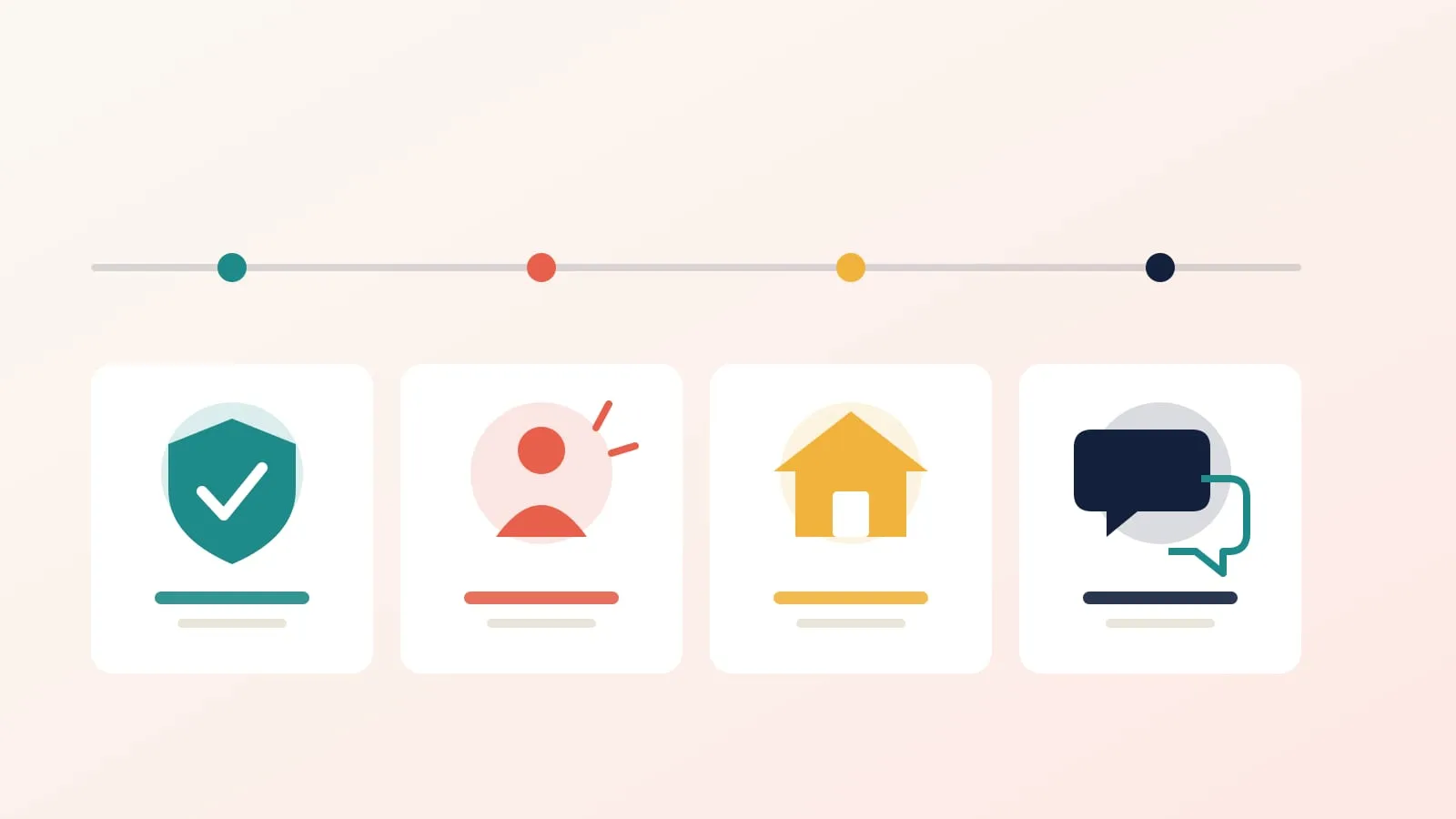
Four indicators guide decisions about when a family is ready for more contact: safety, accountability, stability and communication. Each one can be observed, recorded and explained. Together they give clinicians, attorneys and courts a shared standard for deciding whether to expand contact, hold at the current level or step back.
I’m Monique Harris-Whitt, a Licensed Clinical Social Worker and founder of The Therapeutic Solution in Las Vegas. These indicators sit at the center of readiness-based reunification and of my Continuum of Care. This article takes each one in turn.
Why indicators beat intuition
Clinicians are trained observers, but intuition alone is hard to explain and harder to defend. “I have a good feeling about this family” gives a court nothing to evaluate. And a clinician’s feelings can be wrong, or can differ from a colleague’s.
Indicators fix this. They give everyone a common checklist of things to look for, a way to record what was seen, and a basis for explaining a recommendation. They also help parents, who can see what they are working toward rather than guessing what the clinician wants.
Safety
Safety asks: is the child safe in the current arrangement, and are concerns being named and managed?
Safety includes physical safety and emotional safety. Clinicians look at whether concerns identified in the case are acknowledged rather than minimized, whether a plan exists to manage them, and whether the child’s behavior shows they feel safe.
Safety comes first. A gap here is not made up for by progress in other areas, and it is the one indicator where the right answer is always to slow down until the concern is addressed.
Accountability
Accountability asks: can the parent describe their own part in the family’s history without blaming the child or the other parent?
This does not mean accepting blame for everything, and it does not mean a performance of remorse. It means a parent can say, in specific terms, what they did, how it affected the child and what they are doing differently.
Clinicians look for specifics over generalities, ownership over excuses, and a focus on the child’s experience rather than the parent’s. Parents who can do this give children a reason to trust that the future will be different from the past.
Stability
Stability asks: are housing, routines and relationships steady enough to hold more contact?
A child who is asked to spend more time with a parent needs that time to be predictable. Clinicians consider whether the parent has stable housing, a workable schedule, reliable attendance, and support from people who will not undermine the process.
Stability is not about wealth. It is about whether the child can count on what will happen next. I look at this more closely in a later piece on stability before contact.
Communication
Communication asks: do visits, exchanges and conversations stay calm and child-focused?
This covers communication between the parent and child, and between the parents. Clinicians look at tone, at how disagreements are handled, at whether the child is kept out of adult conflicts, and at whether the parent can respond to the child’s cues.
Communication is often where a family’s progress shows first, and where problems show earliest. It is also where parents can make real change quickly with coaching.
What each indicator looks like in practice
Observable examples, drawn from composite cases rather than any real family, make the indicators easier to apply.
| Indicator | Signs it is present | Signs it needs more work |
|---|---|---|
| Safety | Concerns are acknowledged and a plan exists to manage them; the child relaxes during visits | Concerns are dismissed; the child is on guard or distressed; rules are broken |
| Accountability | Specific, child-focused statements about past harm; no blaming | Vague apologies, excuses, or blaming the child or other parent |
| Stability | Reliable attendance, settled housing, predictable routines | Missed visits, frequent changes, unclear living situation |
| Communication | Calm tone, focus on the child, ability to handle disagreement | Raised voices, putting the child in the middle, escalating exchanges |
This is a guide, not a scoring sheet. The point is to look for what you can see, and to describe it plainly.
Gathering the evidence
Good readiness decisions rest on more than one source and more than one moment. Clinicians commonly draw on:
- Direct observation of visits and exchanges over time
- Parent and child interviews, conducted with care for the child’s comfort
- Records and collateral information, where available and appropriate
- Structured assessment, including tools such as the RARS™ assessment suite, used to organize what was seen
Each source has limits. Observation shows behavior in one setting. Interviews show how people describe things. Records may be incomplete. A careful clinician uses each for what it can show and says plainly what is missing.
When indicators point in different directions
Real families rarely score evenly. A parent may be accountable and communicative but unstable in housing. A child may seem comfortable in visits but worried before and after. Some principles for these moments:
- Safety comes first. If safety is in question, other strengths do not make up for it.
- Ask what the child needs. The aim is the child’s well-being, not a parent’s progress for its own sake.
- Consider a smaller step. Instead of a full expansion, a modest change, such as a slightly longer visit, can test readiness while limiting risk.
- Reassess soon. A clear plan to look again, with specific things to watch for, keeps families moving without rushing them.
- Explain it. Parents and courts should be able to understand why a decision was made and what would change it.
How indicators change across the Continuum
The same four indicators apply at every phase of the Continuum of Care, but what they look like changes as a family moves along.
In therapeutic supervised visitation, safety means the visit itself is safe and rules are respected. Accountability may be early and tentative. Stability shows in attendance. Communication is observed in simple interactions.
In facilitated conjoint therapy, the bar rises. Accountability becomes more specific, because the parent may be speaking directly to the child’s experience. Communication includes how the parent handles harder conversations.
In reunification therapy, the indicators are tested in repair work. Can the parent stay steady when the child expresses hurt or anger? Is stability holding as contact increases?
In aftercare and step-down, the question becomes whether the family can maintain the indicators with less professional support.
Seeing the indicators as a thread through the whole pathway helps programs stay consistent, and helps families understand that the standard is the same from beginning to end, even as the work changes.
Common mistakes in using indicators
A few errors are worth guarding against:
- Treating indicators as a checklist to complete. They are a guide for observation, not a form to tick.
- Judging on a single moment. One hard day does not define a family, and neither does one good day.
- Ignoring the child’s experience. Indicators describe the family’s readiness for the child’s sake, so what the child is showing matters.
- Applying them unevenly. Using different standards for different parents undermines trust and fairness.
- Skipping documentation. An indicator that is observed but not recorded is hard to explain later.
- Using them to punish. The purpose is to guide next steps, not to withhold contact as a penalty.
Awareness of these mistakes keeps the indicators honest and useful.
Using the indicators together
The indicators are designed to be read together. A few principles help:
- Look at patterns, not moments. One good or bad visit rarely settles anything.
- Weigh the whole picture. Strength in one area does not cancel a serious gap in another, especially safety.
- Match the decision to the evidence. The answer is not always yes or no. Sometimes it is “hold here and keep working.”
- Write it down. Observations tied to each indicator, with dates and settings, give the court something it can use.
The indicators also fit with how courts evaluate clinical work: a family court assessment is defensible when it is structured, objective and honest about its limits, and indicators help with all three.
If you lead a program or supervise clinicians and want to build these indicators into your practice, learn more about Continuum of Care training.
This article is for educational purposes and is not therapy or legal advice. Talk with your attorney about your specific case.
Frequently asked questions
What are the four readiness indicators?
Safety, accountability, stability and communication. Safety means concerns are named and managed. Accountability means the parent can describe their own part without blaming. Stability means housing, routines and relationships can hold more contact. Communication means exchanges stay calm and child-focused.
Do all four indicators need to be met at once?
They need to be considered together. A family may be stronger in some areas than others, and a clinician weighs the whole picture. A serious gap in safety, for example, is not outweighed by progress elsewhere.
How are readiness indicators documented for the court?
Through objective notes of what was observed, tied to each indicator, with dates and settings. Reports should separate observation from interpretation and say clearly what the clinician could not see.