Stability Before Contact: Housing, Routine and Support

Part of the guide Family Reunification · Start with What Is Reunification Therapy? A Las Vegas Guide for Parents, Attorneys and Courts
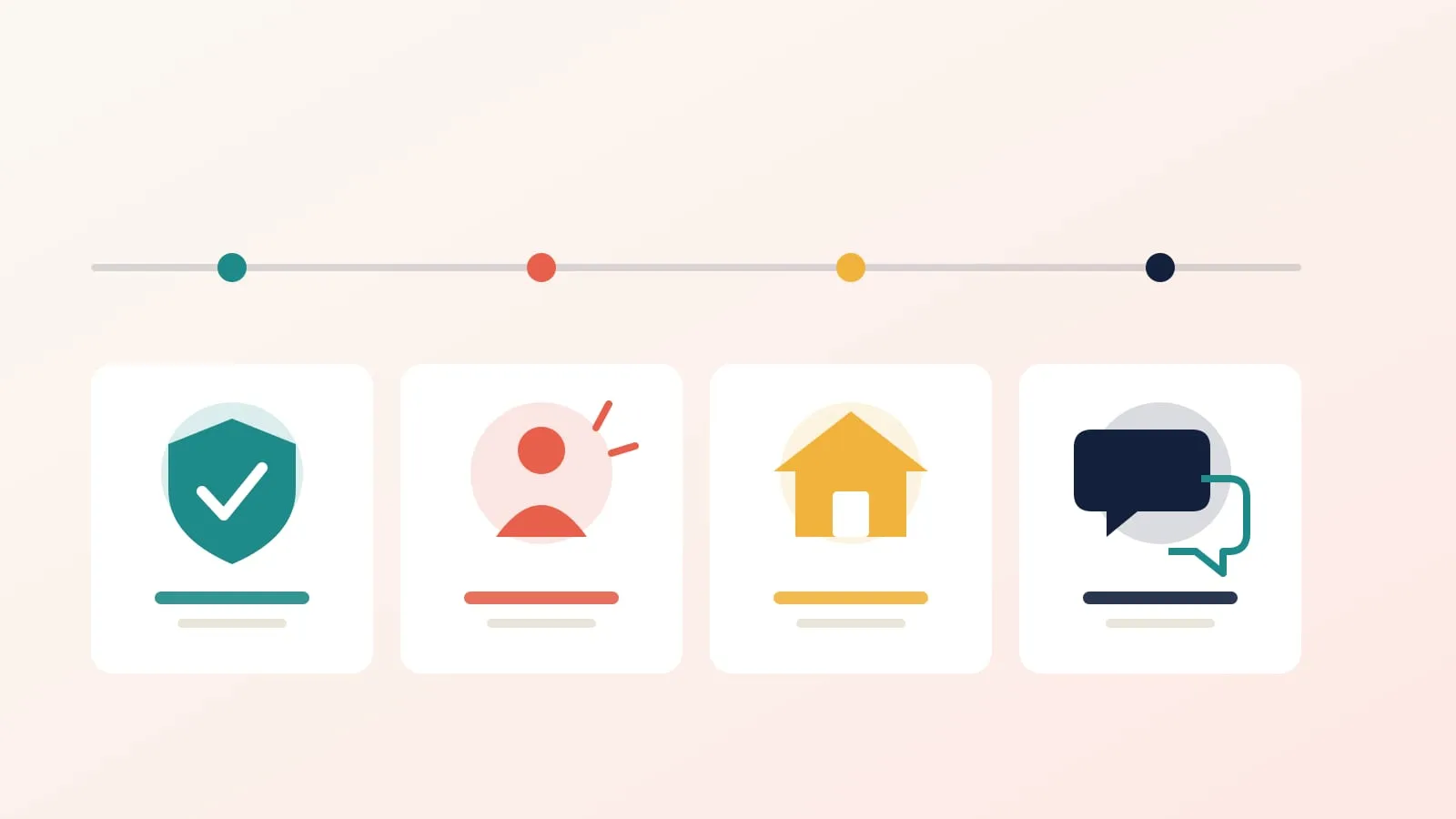
Reunification stability is the degree to which a parent’s life is steady enough to safely hold more contact with a child, including a safe place, predictable routines, health and a base of support. It is one of the four readiness indicators clinicians use to decide whether contact should expand, hold or step back.
I’m Monique Harris-Whitt, a Licensed Clinical Social Worker and the founder of The Therapeutic Solution in Las Vegas. Of the four indicators in our Continuum of Care, stability is the one I see overlooked most often. It lacks the drama of safety concerns or the visible emotion of accountability, yet a child can feel its absence quickly. This post is written for clinicians, family law attorneys and judges who want to understand what stability means in practice, and how to describe it fairly.
Why stability matters for children
Children do not just need a parent who is warm. They need a parent whose life can hold them. A visit that is cancelled at the last minute, a home that changes every few months, or a parent whose health or work is in constant crisis asks a child to carry the instability, and children carry it in their bodies and behavior.
For a child coming back into a relationship after a separation, predictability is a form of safety. Knowing who will be there, when and where lets a child relax enough to connect. That is why stability sits beside safety, accountability and communication in the four-indicator framework I use with every family.
It also matters to the parent. Stability is often the least blameworthy indicator, because many of its barriers are practical rather than moral: a lease that ended, a job with unpredictable hours, no reliable transportation. Naming stability clearly lets a family see concrete steps to work on, rather than a verdict about character.
A note on fairness. Stability does not mean wealth. A modest, safe, steady situation is stable. A larger home that changes every few months is not.
Housing and routine
Housing. Before contact moves into a parent’s home, clinicians want to know that the space is safe and suitable for the child. That includes basic safety, a place to sleep, appropriate supervision of the environment and the people who live there. Early contact in supervised or community settings can continue while housing is unsettled.
Routine. Routines show whether a parent can hold a rhythm. Clinicians watch for:
- Arriving on time, most visits
- Giving notice when something changes
- Meals, naps and homework fitting around contact, where relevant
- Transportation that is reliable enough to avoid repeated cancellations
- Work or school schedules that leave room for the contact being proposed
A single missed visit is not a pattern. Three in a month, with no plan, is information.
A composite example. Consider a composite parent, not a real one. A mother is ordered supervised contact with her six-year-old son. In the first month she misses two visits because of a bus route change, and she is open about it. She finds a different route, brings a written schedule to the next session and does not miss another for three months. A clinician reading this sees a parent who met a practical obstacle and solved it. Compare a second composite parent who cancels repeatedly, gives different reasons each time and does not adjust. The same indicator, stability, tells a different story, and the recommendation would reflect that.
Health, sobriety and treatment
This is the area that needs the most care, because it touches privacy and can easily slide into judgment.
The relevant question is not “does this parent have a health or substance concern?” It is “is the concern being managed in a way that keeps contact safe and reliable?” For many families, that means:
- Participating in treatment or support that has been recommended, with attendance documented where a release is in place
- Being open with the clinician about what is being managed and how
- Showing up to contact in a condition that is safe for the child
- Having a plan for what happens if symptoms or a setback occur
Recovery and mental health management are often long processes. A setback does not erase progress, and a clinician should not treat it as a failure of character. What matters is how the parent responds: telling the team, adjusting contact if needed and returning to the plan.
Clinicians are not medical or legal investigators. They describe what they observe and what the parent reports, they note what could not be verified, and they leave determinations of fact to the court.
Support networks
No parent does this alone, and children benefit when the adults around them are steady. Support does not have to mean a large circle. Clinicians look for:
- At least one reliable adult who can help with transportation, backup care or a calm presence
- Healthy connections to people who support the parent’s progress and the child’s wellbeing
- Professional supports, such as a therapist, a parenting class or a case manager, where those make sense
- Awareness of who is around the child. Contact is safer when the adults in a child’s orbit are known and appropriate.
Isolation is worth noticing, gently. A parent with no support may struggle if a crisis hits, and a plan for that can be part of readiness work. That is a reason to build support, not to withhold contact on its own.
Documenting stability
Judges and attorneys do not need a character reference. They need clear, neutral information about what was observed. Good documentation of stability:
| Area | What to record | What to avoid |
|---|---|---|
| Attendance | Dates attended, late, cancelled and reasons given | “Unreliable” without dates |
| Housing | What was observed or reported, and what could not be verified | Assumptions about neighborhood or income |
| Routine | Patterns over several weeks | Conclusions from a single visit |
| Health and treatment | Participation and parent’s own account, with a release where appropriate | Diagnoses or speculation outside your role |
| Support | Who is involved and how | Opinions about the parent’s friends or family |
A few habits make the record stronger:
- Use the same structure each time. Patterns become visible when notes are consistent.
- Separate observation from interpretation. “Arrived on time to nine of ten visits” is an observation. “Very committed” is an interpretation.
- Note change over time. Stability is a trajectory.
- State your limits. If something could not be verified, say so.
- Link to a recommendation. Every call to expand, hold or step back should point to what was observed.
Scores and observations inform decisions. They never make them alone, and the court decides what is ordered. Readers who work with visit records may also find our guide to parent accountability reunification helpful, as it sits alongside stability in the same framework. When a child is reluctant, it can help to understand resist refuse dynamics before concluding that an unstable situation is the cause. Clear, neutral writing matters here too, and objective visitation report writing goes through how to do it.
Stability for the child, not only the parent
Reunification stability is ultimately measured in the child’s experience, not in a checklist.
It is easy to talk about stability as something a parent must demonstrate. It helps to flip the view and ask what stability feels like to the child. A child experiences it as small, repeated certainties: the visit happens when I was told it would, the same adult is there, the room looks the same, and no one is upset about how I got there.
A few questions clinicians can ask from the child’s side:
- Does the child know what will happen at each visit, and does it usually happen that way?
- When plans change, does the child hear about it from a calm adult, in simple words?
- Does the child have a comfort item, a familiar routine or a predictable end to the visit?
- Is the child ever asked to manage an adult’s practical problems, such as passing messages about money or housing?
Looking at stability this way keeps the indicator child-centered. It also helps avoid a common trap, which is to treat a parent’s hardship as a character flaw. A parent who is sleeping at a relative’s home but arrives on time, prepared and calm is offering the child a lot of stability. A parent with a spacious house who cancels often is not.
Stability when circumstances change
Assessing reunification stability fairly means expecting ordinary change and watching how a parent responds to it.
Life does not hold still, and a readiness-based approach should not punish a parent for ordinary change. People move, change jobs and lose or gain support. What matters is how they handle it.
When a parent’s circumstances change during the work, I look for four things. Did they tell the team in advance? Did they think about the effect on the child? Did they keep the routine for contact intact, or propose a sensible alternative? And did the change settle into a new pattern, or keep shifting?
If the answer is mostly yes, a change can even be evidence of growing stability, because the parent managed it without losing the child’s routine. If the answer is no, the recommendation may be to hold contact at its current level while the situation settles, with clear steps for what would let it move forward again. Either way, the child’s pace comes first, and contact is never forced.
Putting stability to work
For clinicians, the practical step is to write down what stability looks like in your setting and to give each parent a clear, kind picture of it early. For attorneys and judges, it is to ask providers how they assess stability and what they do when a parent’s circumstances change.
Programs that want their staff to apply these indicators consistently can explore Continuum of Care training. To talk through how this fits your program, the discovery call on the training page is a good first step.
This article is for educational purposes and is not therapy or legal advice. Talk with your attorney about your specific case.
Frequently asked questions
What does stability mean in reunification?
Stability means the parent's circumstances can reliably hold more time with the child. That usually includes a safe and suitable place for contact, predictable routines, steady attendance, appropriate management of health or substance concerns, and some trusted support. It is about reliability, not perfection or income.
Does a parent need stable housing for more contact?
Not always in the same way. Contact can sometimes happen in supervised or community settings while housing is unsettled. Before contact moves into a parent's home, clinicians generally want the space to be safe and suitable for the child. The court decides what is ordered, and the clinician describes what was observed.
How is stability verified?
Clinicians rely on direct observation, consistent attendance records, the parent's own account, and information that can reasonably be confirmed, such as documented treatment participation when a release is in place. They record what they saw and note what they could not confirm. The aim is a pattern over time, not a single snapshot.